Chirp Air Station is a complete IoT service that measures temperature, pressure, humidity and air-quality index across a connected urban environment. It spans the full stack — from battery-powered sensor firmware up to a containerized backend and a real-time web dashboard.
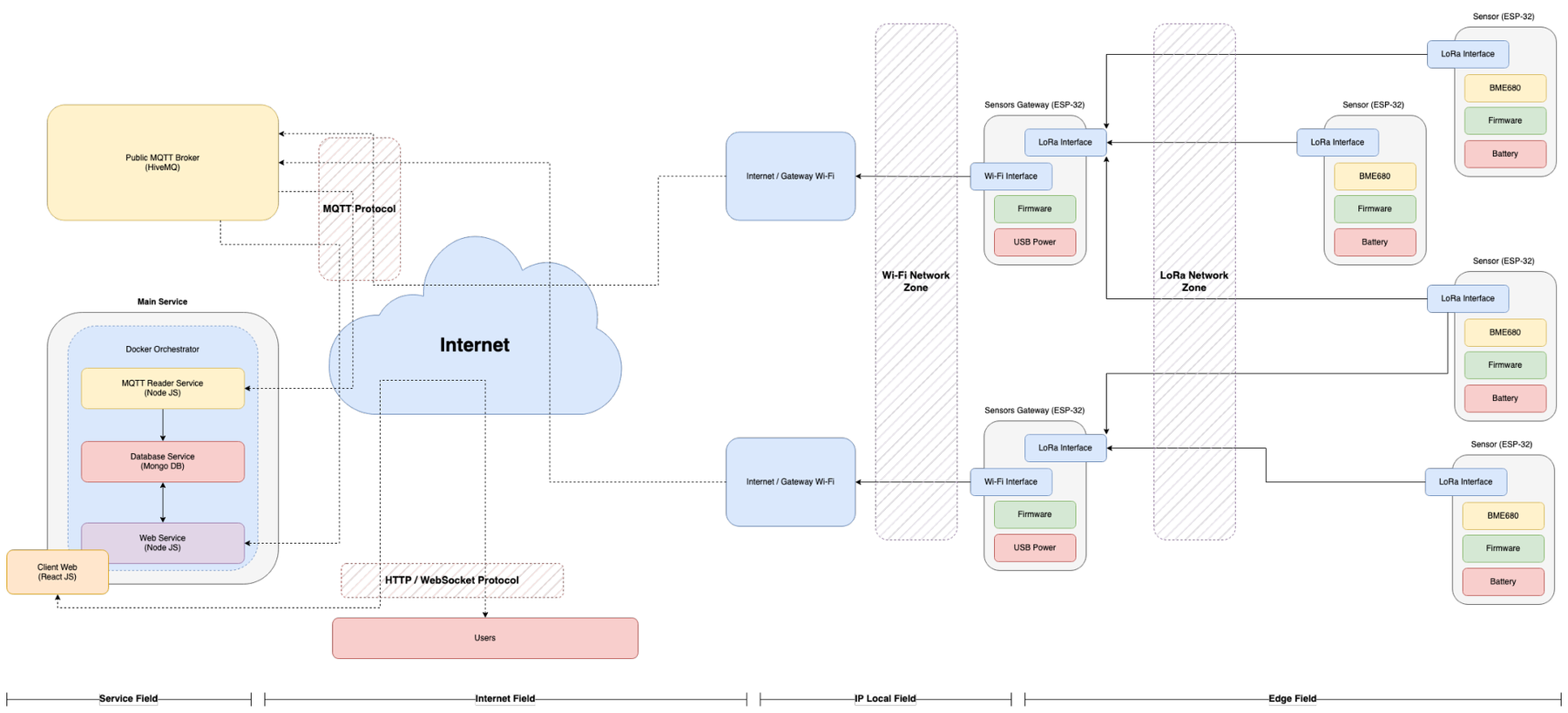
The system is organised in four layers: low-power edge sensor nodes, a Wi-Fi gateway that bridges them to the Internet, a service backend that ingests and stores the data, and a web client that visualises it.
Chirp Air Station was a multi-disciplinary university project, developed across four exams — Web Applications & Services, Distributed Systems, Project Management and Smart City & Mobile Technologies — each adding a different lens: the web/IoT stack, the distributed architecture, the planning and management process, and the smart-city angle of low-power autonomous nodes and city-scale environmental monitoring.
Edge: sensor nodes
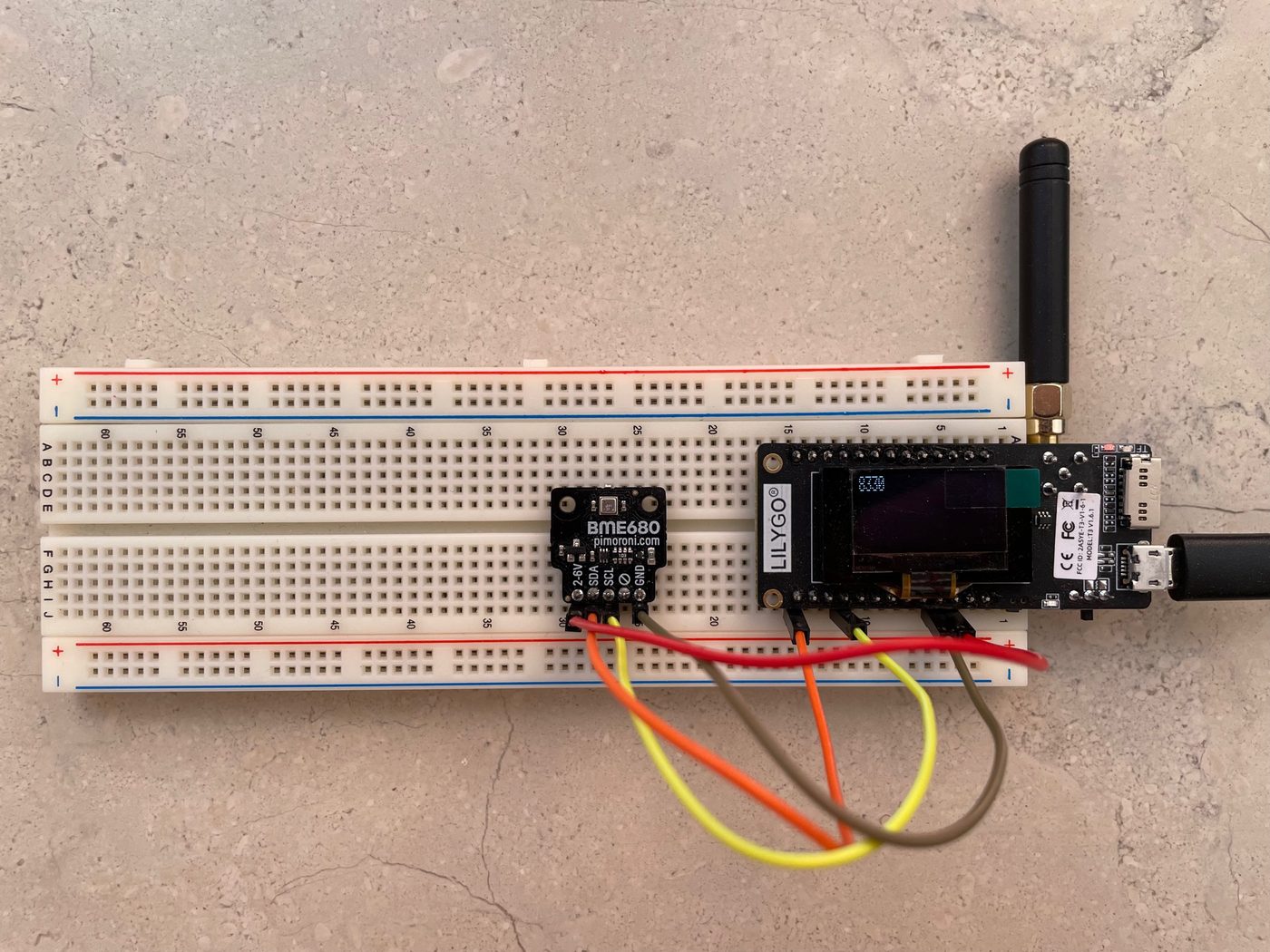
Each sensor node pairs an ESP32 (LILYGO LoRa board) with a BME680 environmental sensor over I²C. The node samples the four metrics, packs them into a compact message and transmits over LoRa — a long-range, low-power radio link that lets nodes run on battery far from any Wi-Fi access point. The firmware is written in C++ on the Arduino / PlatformIO framework.
Gateway & data pipeline
A Wi-Fi-connected ESP32 acts as the LoRa→IP gateway: it receives the radio packets and republishes them to a public MQTT broker (HiveMQ). On the server side a small Node.js reader subscribes to the broker and persists every reading into MongoDB, while a second Node.js web service exposes the data to clients. The whole backend — MQTT reader, database and web service — is orchestrated with Docker Compose for one-command deployment.
Web client
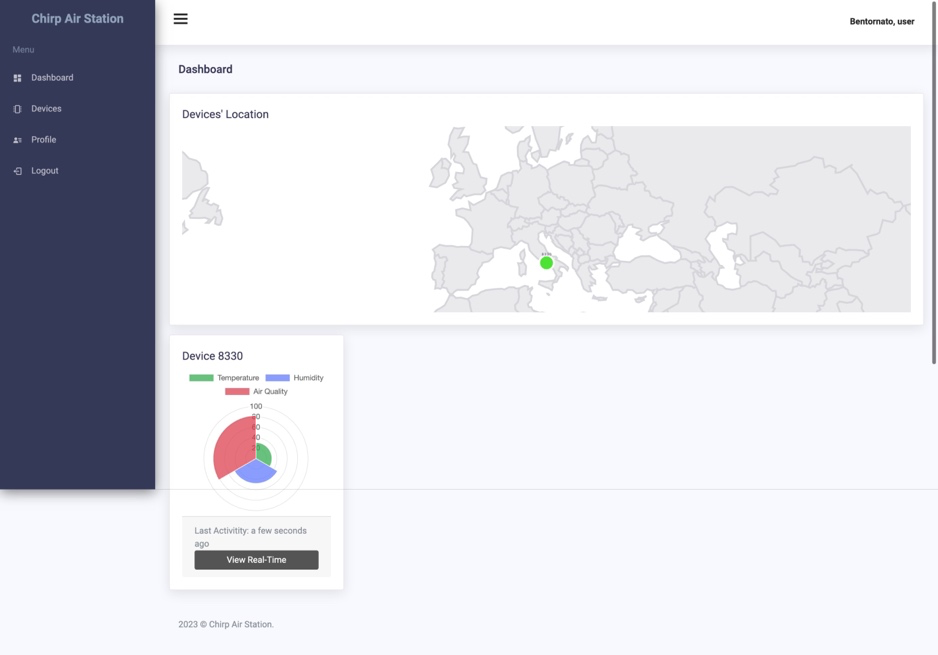
A React single-page application lets users browse their devices on a map, inspect per-device gauges for temperature, humidity and air quality, and drill into a device for live charts and a full history of measurements.

Distributed-systems design
Beyond the stack, the platform was designed as a proper distributed system, organised into conceptual fields — Edge, IP-Local, Internet and Service — each with its own devices, protocols and responsibilities. The backend is split into two cleanly separated microservices with distinct concerns:
- the MQTT Reader owns ingestion — it subscribes to the sensor topic, deduplicates incoming messages and persists them to MongoDB;
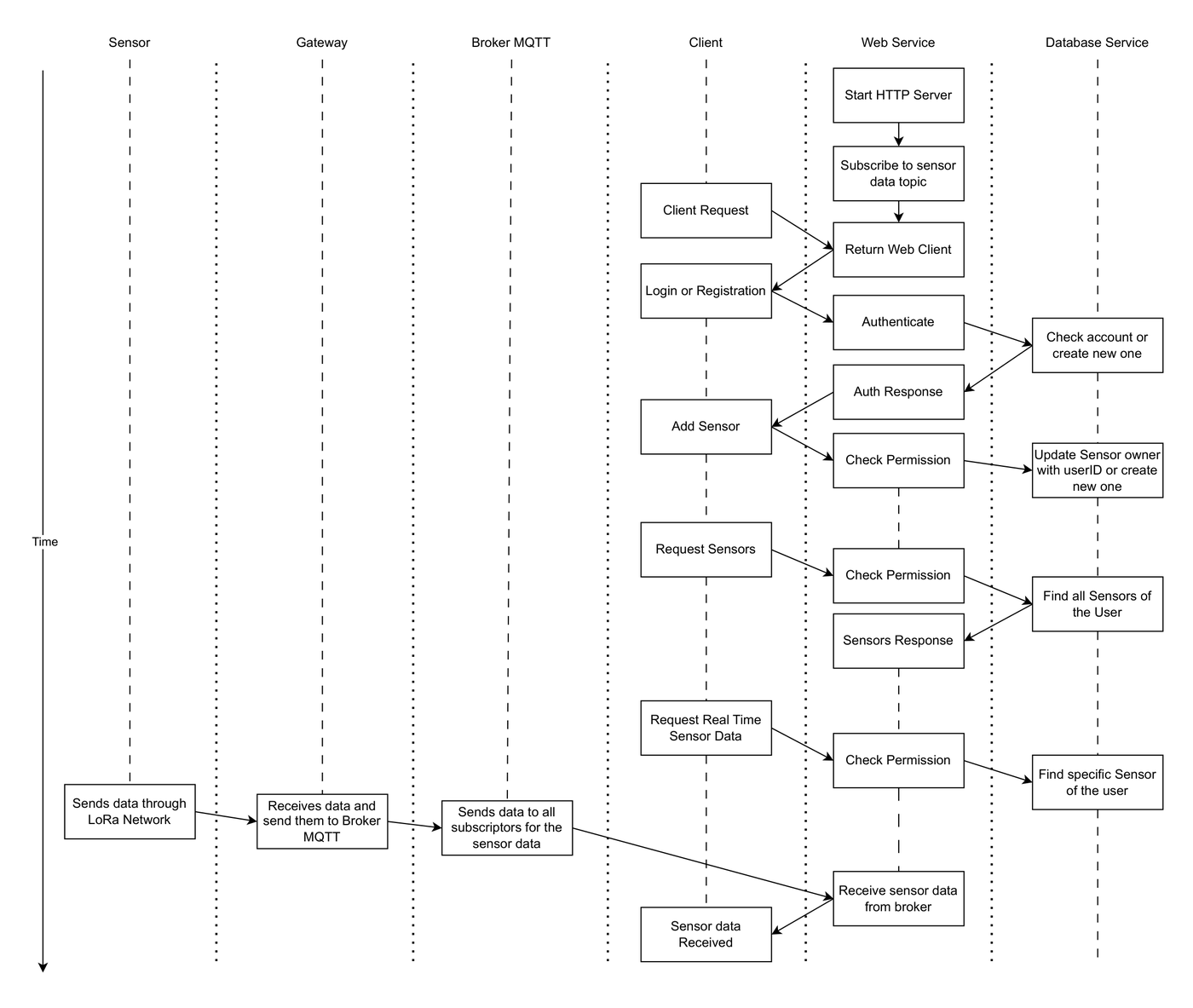
- the Web Service stays stateless with respect to readings — it exposes authenticated REST APIs (split into User, Sensor and Reads routers) and pushes real-time updates over WebSocket, relaying each live reading straight to the connected client without storing it.
This separation of responsibilities lets the Web Service scale horizontally behind a load balancer. The sequence diagram below traces a full interaction, from a LoRa packet leaving a sensor all the way to a real-time update in the browser:
Project management
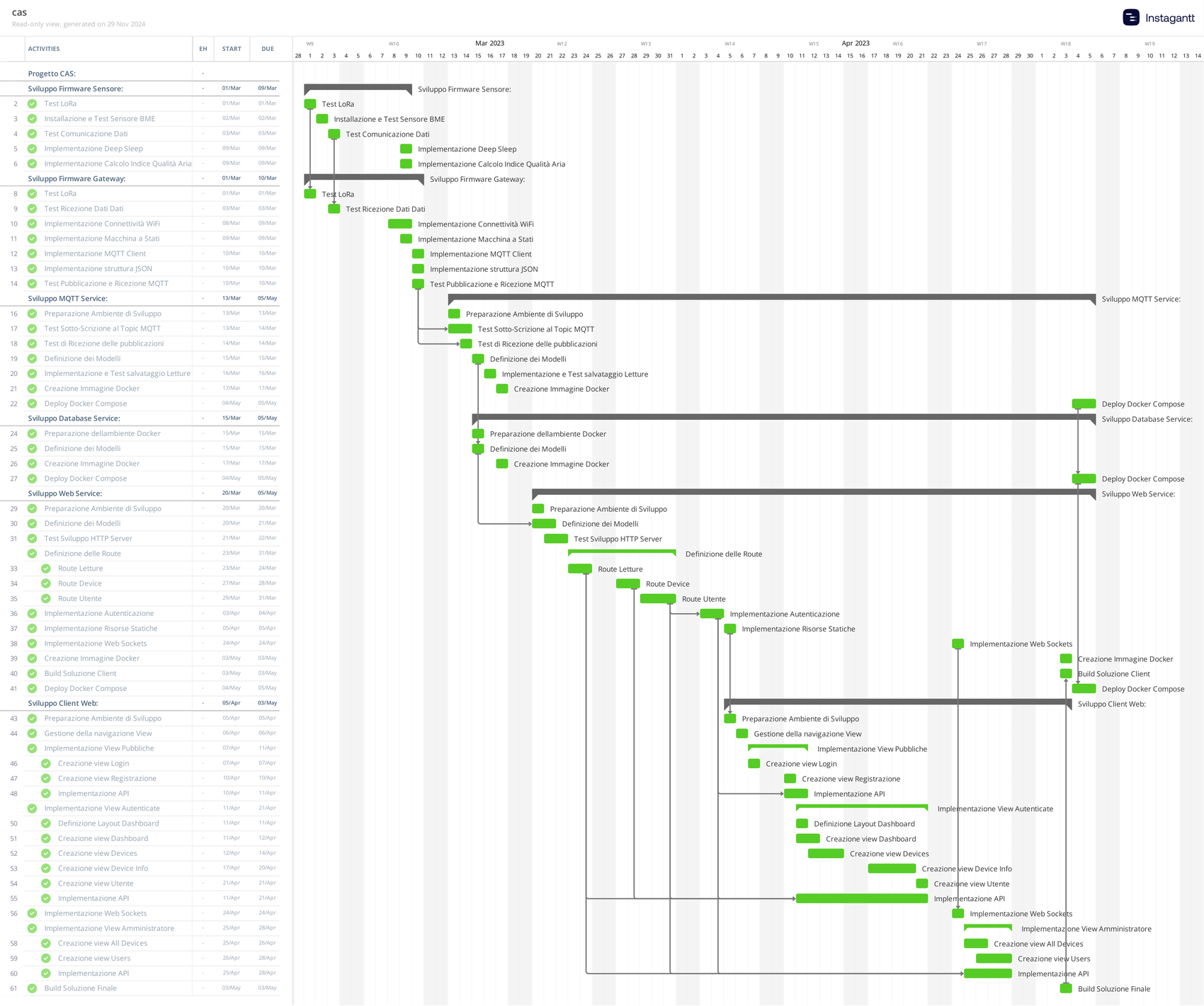
Chirp Air Station was also run as a full project-management exercise, with the complete lifecycle documented: a Project Description Statement, a Work Breakdown Structure, a Resource Breakdown Structure, a Gantt schedule, a risk register, quality-assurance and deployment plans, and a closeout report. The Gantt below decomposes the work into firmware, gateway, MQTT and database services, web service and web client phases. Among the recorded lessons learned: testing time was underestimated, and hardware/software compatibility should be validated earlier during prototyping.
The repository is organised as a multi-module project (Git submodules): cas-sensor-lora and cas-sensor-gateway for the firmware, cas-mqtt-service for ingestion, and cas-web-service for the backend and React client.